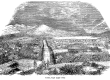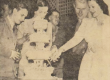


In 1906, immigrants Alice and Edward McCreery Shea Hill moved to Wingham where they opened a business next to the Australian Hotel. Alice, a milliner and dressmaker, sold her hats, ready-made skirts and made-to-order wedding dresses while Edward, who had trained in Dublin as a chemist, opened a pharmacy and dental surgery.1
Having moved into new brick shops on the same site, the couple rebranded their business as the “Elephant House” in 1914 and used a striking image of an elephant to draw attention to their expanding range of products.2
The couple was deeply committed to the town of Wingham. During WWI, Alice organised for fresh fruit and vegetables to be brought by train from Sydney to help local mothers feed their families.3 When Edward later became Mayor of Wingham, Alice stepped into an even greater community role as Mayoress.4
During the influenza outbreak of 1919, Alice led the quarantine measures by setting up a makeshift hospital at the Wingham Public School. She also raised £200 for the instalment of a clock at the Wingham Memorial Town Hall to honour the fallen.5
The Hills moved back to Sydney in 1928, but their connection to Wingham never faded.6 Every year Alice would send a snip of green ribbon to the Wingham Chronicle journalist “Fitz” for St Patrick’s Day – a tradition Edward continued after her death in 1942, until his own passing in 1946.7
The Returned Sailors’, Soldiers’ and Airmen’s Imperial League of Australia (RSSAILA) bought the Elephant House in 1948 and the location is where the Wingham Services Club is in 2026.8
Author: Janine Roberts


References:
1 Manning River Times, 13 June 1906, 2; Alice Grey Bowles was born in Anglesey, Wales in 1863 and Edward was born in West Lothian, Scotland in 1861. They married in Dublin before moving to Sydney in 1891. The Chemist and Druggist, 12 February 1898, 278. Edward appears to have faced difficulties having his Irish pharmacy qualifications recognised in Sydney, NSW.
2 Wingham Chronicle, 18 March 1914, 2. William Fotheringham was the owner of the brick shops which became the Elephant House.
3 Wingham Chronicle, 12 April 1918, 4.
4 Dungog Chronicle, 19 July 1946, 1.
5 MRT, 9 January 1943, 6.
6 MRT, 28 November 1928, 6.
7 Dungog Chronicle, 19 July 1946, 1.
8 WC, 20 May 1949, 3.