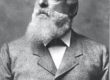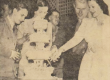


When WWI began in 1914, the Defence Act 1903 prevented First Nations people from enlisting. But as the war went on and losses mounted, restrictions eased.2 On 6 December 1916, Harold Howard Maher stood at the Sydney Showground beside William Simon and enlisted, determined to serve.3
Harold departed for overseas service on 24 January 1917, travelling to the battlefields of France. He endured some of the war’s most brutal fighting, including the Third Battle of Ypres. Amid the mud, fear and chaos, many Aboriginal soldiers later said this was the first place they felt a sense of equality—paid the same wages and living under the same conditions as other men.
In August 1918, Harold was injured by a gunshot wound to the face. He was sent to the UK to recover before returning home to Australia in February 1919.
The freedom he had briefly known did not follow him home. Aboriginal servicemen were still denied basic rights. Harold was not entitled to a soldier settlement block—land offered to other returned soldiers—and instead returned to living at Purfleet Mission as a labourer.4
In 2022, teacher Kristen Jones and students from St Brigid’s Primary School, Raymond Terrace, embarked on a project to research the lives of WWI servicemen. They were given Harold’s name that had been recorded incorrectly as “B Marr” on the Karuah War Memorial.
On Remembrance Day 2022, the Maher/Marr family received the students’ research and spoke at a service honouring Harold. They were overjoyed, having been unaware of his sacrifice.
Author: Janine Roberts

References:
1 AWM, https://www.awm.gov.au/collection/C1068777?image=1
2 First Nations Australian serving during World War I, https://anzacportal.dva.gov.au/wars-and-missions/ww1/personnel/indigenous-service
3 NAA: B2455, MAHER Harold Howard, NAA: B2455, SIMON William.
4 Ancestry.com, electoral rolls 1930s, https://www.awm.gov.au/articles/encyclopedia/indigenous#:~:text=Returned%20soldiers,vote%20for%20another%2017%20years