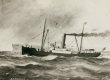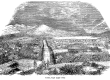


In September 1837, Captain William Terry of the whaling brig Tigress informed passing ships that he was seriously ill and intended to dock at Carrington, Port Stephens.1 Carrington was the first planned town of the Australian Agricultural Company established in 1826.2
For the previous eight months, William and the Tigress had hunted across the Pacific Ocean, collecting 600 barrels of sperm whale oil for the South Sea Whaling Fishery.3 While whaling is viewed very differently today, it was once a vital industry. Before the rise of petroleum in the 1850s, whale oil was widely used for lighting and lubricating machinery. Whaling became Australia’s first major industry and played a key role in the economy and culture of New South Wales.4
We do not know exactly how William spent his final days at Carrington, though it is believed his wife Ann was by his side. He was too ill to sail the Tigress and its valuable cargo back to Sydney, so the ship’s owners arranged for its return.5
Captain Terry died on 4 November 1837 at just 36 years of age. He was buried two days later in the AACo’s cemetery established in 1834.6 His headstone, still standing in 2026, is the oldest surviving grave marker in Carrington Cemetery.
Author: Janine Roberts

Sacred to the Memory of Captain William Terry.
Formerly Master of the Whaling Brig Tigress
Who departed this life 4 Nov 1837.
Aged 36 years.
By thy wife’s hands thy humble grave adorned.
By strangers carried and by strangers mourned.
To hopes of bliss he left this world of care
With Christ above eternal life to share.
References:
1 Sydney Monitor, 13 Sep 1837, 2.
2 Australian National University Archives: https://archives.anu.edu.au/exhibitions/200-years-australian-agricultural-company/early-years#
3 Sydney Gazette, 14 Sep 1837, 2.
4 NMA: https://www.nma.gov.au/defining-moments/resources/start-of-whaling
5 Sydney Monitor, 9 Oct 1837, 2
6 NSW BDM, Death certificate William Perry [sic], 2944 Vol: 21.