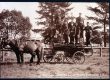


Many have heard about the 30,000 Australians who were held overseas as prisoners of war (POWs) during WW2, but what is known of the international POWs held here in the MidCoast?
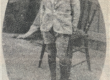
Italian-born Torello Bartoccini was just 23 years old when he was captured by the British at Tobruk in 1941. He spent three years in a POW camp in India before transportation to Australia in 1944.1 As an ally, Australia accepted POWs at the expense of the British Government. While German and Japanese POWs were confined to camps such as Cowra, Italians (seen as a lesser threat) were approved to participate in a rural farming scheme.2
In 1944, Prisoner of War Control Centres (PWCC) were established across Australia. The centre for this region was in Victoria Street, Taree. Rural property owners within a 35 mile (56 km) radius of Taree could apply for POW labour, provided they supplied accommodation and cooked meals.3
Reta Bowers was one such applicant. Her husband Cyril, a Western Front veteran in WWI, re-enlisted in WW2.4 Torello was assigned to help Reta who was struggling with the milking and pigs on their Nabiac farm. He lived in a small wooden hut, kept bees and sat at Reta’s dinner table until the end of the war.5 He was repatriated to Italy on the Alcantara 23 December 1946.6
In total, 99 Italian POWs were sent to Taree.7 Today a derelict hut and bee hives are the only remaining traces of Torello’s time on the farm.
Author: Janine Roberts with kind assistance from Richard Bowers.


References:
1 NAA: MP1103/1 POW service and casualty form for Torello Bartoccini.
2 NAA: A7711, History: Report on the Directorate of Prisoners of War and Internees at Army Headquarters, Melbourne, 1939-1951, 215.
3 NAA: A7711, History; Northern Champion, 6 May 1945, 4. Taree PWCC N26 was initially set up in Victoria Street and later moved to Manning Street.
4 NAA: B2455 and B884, Bowers Cyril John.
5 Oral history from the Bowers family, 2024.
6 NAA: MP1103/1 POW service and casualty form.
7 NAA: A7711, History: Report on the Directorate of Prisoners of War and Internees at Army Headquarters, Melbourne, 1939-1951, 215.