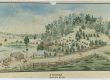


The town of Taree came into being when Henry Flett subdivided part of his extensive landholding in 1854. It developed into the largest urban settlement in the Manning Valley and was provided a substantial economic boost when the railway arrived in February 1913.
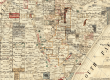
In October 1913 a new company, “The West End Estate Taree Limited”, was registered with the objectives of acquiring lands known as “Flett’s Paddock” and manufacturing bricks etc.1 This land, comprising just over 65 acres, was to be subdivided into 200 quarter acre residential blocks:2 a very ambitious undertaking.
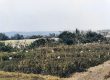
The blocks were advertised by the flamboyant auctioneer, Allan Deucher, the text being supplemented by photos taken by local photographer R E Crombie.3
The first blocks were auctioned on 26 November 1913 with few sales on the day.4 The company became embroiled in controversy with Manning Shire Council over the extensive road and drainage works required and the outbreak of WW1 further impacted sales.
It was not until 1920 that the roads were noted as being satisfactorily completed, which encouraged sales and residential construction.5
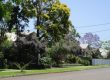
The company was voluntarily wound up in 19226 and the results of its ambition remain today in the many lovely 1920s homes lining the leafy streets, some referencing the original company directors: Smith Street (Alfred Edwin Smith), Alban Street (Alban Albury Maloney), Hooke Street (now part of Wynter Street) (Frederick A Hooke).7
Author: Penny Teerman


References:
1 Dun’s Gazette for New South Wales Vol. 10 No. 18 (3 November 1913)
2 Manning River Times Wednesday 17 September 1913 P5
3 Manning River Times Wednesday 8 October 1913 P2
4 Manning River Times Saturday 29 November 1913 P6
5 Wingham Chronicle Friday 19 March 1920 P6
6 Government Gazette of New South Wales Friday 7 April 1922(Issue No. 59) P2187
7 Dun’s Gazette for New South Wales Vol. 10 No. 18 (3 November 1913)