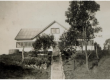


Rustic huts such as this once dotted the Barrington Tops. They were a refuge for people escaping the elements of the wilderness. Perhaps the best-known shelter was “Edwards Hut”. Built in 1905 by the Edwards family, it initially gave shelter as they grazed their cattle at Barrington Tops over the summer months.1 It was located on a plateau just 2 miles from Carey’s Peak – one of the area’s highest points. Constructed of planks cut on the spot by a pit saw, the hut had three rooms, stables and a fenced yard. Although the winter winds whistled through the gaps the fireplace kept it warm.2
Edwards Hut became popular with those travelling on the Tops: tourists, scientists, recreational visitors and political parties. Basic food supplies were left in the hut, along with blankets and mattresses.3 The most curious aspect of this little grey shack was the hundreds of names written or scratched into every inch of the walls, roof and rafters. By 1917 it was impossible to find any blank space.4
The first car on the Barrington Tops reached here on 15 January 1924 and a sign on the verandah commemorated the event for years.5 In 1928 it was used as a search base for a lost stockman,6 while in 1929 two missing University of Sydney students found their way back to camp after gaining sustenance from a can of condensed milk kept at the hut.7
In December 1929 the hut burned down.8 While it was not rebuilt, the area continued to be referred to as “Edwards Hut” for decades.9
Author: Janine Roberts
References:
1 Dungog Chronicle, 2 December 1930, 4, Gloucester Advocate, 9 November 1923, 1, Dulcie Hartley, Barrington Tops: A vision splendid, 1993.
2 Daily Telegraph, 26 April 1924, 13.
3 Newcastle Sun, 26 January 1924, 9.
4 Maitland Daily Mercury, 4 July 1923, 7.
5 Dungog Chronicle, 26 February 1924, 4.
6 Manning River Times, 6 October 1928, 10.
7 Muswellbrook Chronicle, 11 October 1929, 1.
8 Dungog Chronicle, 6 December 1929, 5; Maitland Daily Mercury, 17 November 1934, 2.
9 Dungog Chronicle, 15 June 1937, 3.